

Why Insulin Sensitivity Matters More Than Obsessive Calorie Counting
Posted in :

We have all been there, obsessing over counting calories, reading nutritional labels, logging food in calorie-counting apps, but more often than not, this whole exercise proves to be futile. Have you ever wondered why some people eat like horses and still appear lean? What’s their secret? Why don’t they gain weight? They may be blessed with high metabolism, but the truth lies in a simple body physiology hack. Let me spill the magic bean of fat loss for you: insulin sensitivity.
Calories do matter, but only up to a certain extent. We should always strive for clean fuel for our bodies, but in reality, it’s your hormones that decide your fate. The insulin hormone is a key factor in determining whether your clean fuel will turn into fat or muscle. The key strategy should be to optimize insulin sensitivity.
In this blog, I’ll share some easy-to-apply, simple daily life tweaks that can revolutionize the way your metabolism works, and soon you’ll be shedding excess fat from your tummy without resorting to crash diets.
What Is Insulin Sensitivity (and Why It’s a Game Changer)
Insulin sensitivity is the ability of your body to draw sugar into your muscles and cells from the bloodstream in response to the insulin hormone. The more insulin-sensitive a person is, the more efficiently their body can utilize blood sugar after a meal.
Here is the kicker: when a person constantly spikes their blood sugar levels by consuming high-glycemic index foods, their cells become resistant to insulin, and thus the excess sugar is stored as fat.
Now, this isn’t good, cause that means their body is prioritizing fat gain instead of storing the valuable nutrients as glycogen in muscle tissue. This, in turn, creates a vicious loop; every time they consume foods with a high GI index, a rapid rise in blood sugar levels is followed by a fast crash, causing fatigue, cravings, and emotional eating.
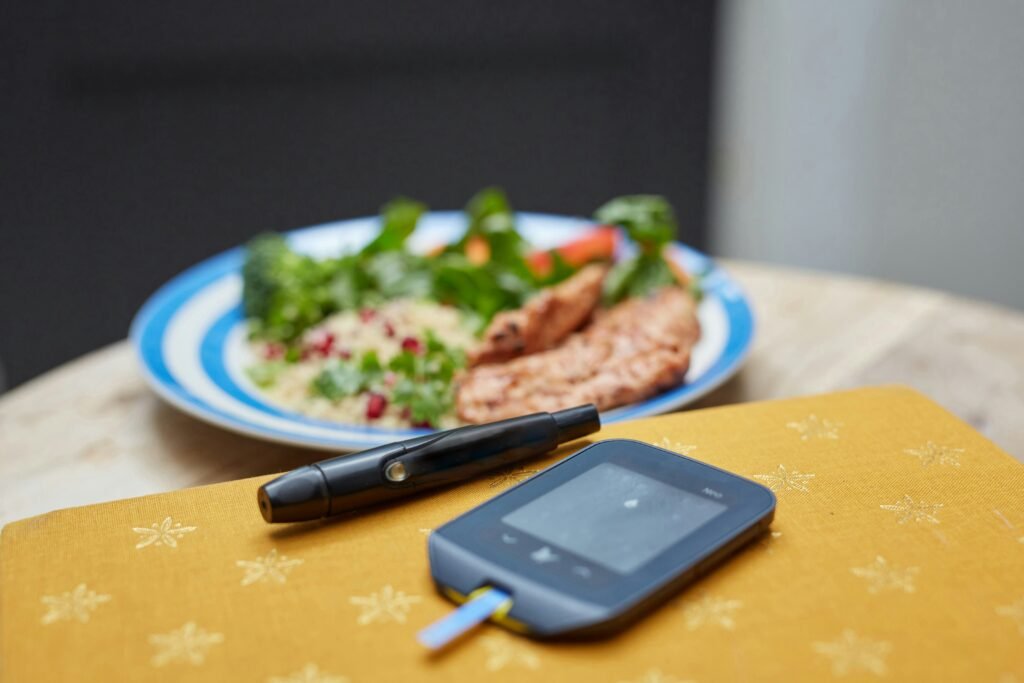
The primary goal should be to gain muscle mass and maximize insulin sensitivity. This will help eliminate stubborn fat and also boost metabolism. That way, body composition will be far more aesthetically pleasing in the long run than simply counting calories and starving through yo-yo diets.
How to maximize insulin sensitivity:
The most basic tweak that can be made instantly and with ease is to maintain stable blood sugar levels throughout the day. This can be achieved through simple daily habits that can be implemented from today.
- Eat three consistent meals a day, which should be high in protein, along with complex carbs, and healthy fats in moderation.
- Keep food portions controlled and small. Furthermore, eat slowly and chew properly.
- Prevent a sugar spike and subsequent crash by eating foods with a low glycemic index or combining high-glycemic index foods (in moderation) with protein, fat, and fiber.
- Brew green tea leaves with cinnamon, cardamom, cloves, and ginger in hot water, squeeze a lemon on top, and drink it in the afternoon (an excellent tonic for boosting insulin sensitivity).
- Try to walk 10k steps daily (not all at once) but rather in chunks of 15 to 20 minutes spread out throughout the day. Walking for 10 to 15 minutes after a meal will help push blood sugar into the muscles, independent of the insulin pathway.
- Avoid sitting for too long (Sitting is the new-age equivalent of smoking). Take a 10-minute walking break every 50 minutes. This simple trick will do wonders for insulin sensitivity.
- Engage in weightlifting 4 to 5 times a week to build muscle, and cardio exercises to maintain endurance. Well-developed muscles will act as a sponge and suck the sugar out of the blood.
- Get 10 to 15 minutes of sunlight daily, and it will boost mood by increasing the levels of dopamine and serotonin during the day.
- Have a consistent bedtime, 10:30 pm to 6:30 am works great and will ensure 8 hours of regular sleep.
"You don't need to take a giant leap, just small, consistent steps in the right direction." — Unknown
“To keep the body in good health is a duty… otherwise we shall not be able to keep our mind strong and clear.” — Buddha
The Real-Life Example: Twins on Same Diet, Workout Regimen but Different Results
Let me take a detour and give you an example.
Consider two fraternal twins, Mark and Greg, who follow the same diet and workout regimen for the next six months. However, their body compositions can be tremendously different due to variations in their insulin sensitivity.
| Mark: The Infamous Night Owl | Greg: The Elegant Morning Lark |
| He is the infamous night owl, who gets up at three in the afternoon, eats pre-workout nutrition, and heads to the gym and works out intensely for the next hour or so, then heads to work, where he does the graveyard shift, and comes home at 6 in the morning, then sleeps for the next 9 to 10 hours. | For he is the typical morning lover, waking up at 6 am, having his usual cup of joe, and heading to the gym to do a fasted workout. Then he walks or runs for the next 30 minutes (Kudos to discipline). Now, he comes home, eats a high-protein breakfast, and leaves to clock in at work. One thing about Greg is that he is a man of his time; he eats at the same time every day and consistently sleeps at 10 pm. |
In Essence
They are twins, follow the same diet, the same workout routines, and even walk the same number of steps (Give or take a thousand).
The main differentiating factor is that Greg sleeps at night, while Mark is a daytime sleeper. Greg walks throughout the day in chunks of 15 minutes and also uses a standing desk, while Mark sits at his desk job and thinks, “I’ve already done my workout, so why bother with my walk and diet?”
However, (there always is a however) the difference in their body composition is tremendous, as evident in this picture.

Why such a difference in their physique and body composition? This is because Greg has greater insulin sensitivity, while Mark is more insulin resistant.
Evidence From Research
- Night owls tend to have lower insulin sensitivity and poorer metabolic health.
People with late chronotypes (night owls) have reduced insulin sensitivity and higher risks of metabolic syndrome, even when diet and exercise are similar. Misalignment between internal circadian rhythms and behavioral schedules leads to insulin resistance and impaired glucose tolerance (Sato et al., 2019; Wong et al., 2015). - Regular sleep schedules improve insulin sensitivity.
Maintaining consistent sleep and wake times enhances insulin action and glucose metabolism. Circadian misalignment or chronic sleep loss decreases insulin sensitivity and raises cortisol, disrupting metabolic control (Buxton et al., 2012). - Daytime physical activity boosts insulin sensitivity throughout the day.
Light to moderate daytime movement (e.g., walking, standing) enhances glucose uptake and insulin sensitivity, even when total exercise volume is the same (Van Cauter et al., 2007). - Morning exercise and fasting can enhance metabolic flexibility.
Morning or fasted exercise improves fat oxidation and insulin sensitivity compared to evening workouts, aligning better with natural circadian peaks in metabolic efficiency (Savikj et al., 2019). - Meal timing aligned with the circadian rhythm improves insulin response.
Eating earlier in the day enhances insulin sensitivity, while late-night eating worsens glucose tolerance and fat metabolism, even when total calorie intake is identical (Garaulet & Gómez-Abellán, 2014).
Hormones > Calories Alone
Your hormones determine what your calories become. The key concept to understand here is nutrient partitioning. Think of your metabolism as a logistics manager; when nutrients come into the body, it must decide where to allocate them. Whether to use the nutrients to build muscles, provide energy, or store them as fat.
This decision is influenced by insulin sensitivity and hormones such as,
- Testosterone – The muscle-building hormone. Testosterone enhances muscle protein synthesis and facilitates the uptake of nutrients into muscle cells. It is the driving force that tells your logistics manager, i.e, your metabolism, to push nutrients into the muscle instead of storing them as fat.
- Insulin – The gatekeeper. Think of insulin as the bouncer who will gatekeep the entrance of nutrients into cells. When insulin levels are high, muscles absorb nutrients eagerly, much like a sponge, for fuel and growth.
However, if your body is insulin resistant, then blood sugar levels will rise, and your logistics manager will redirect the nutrients into fat cells instead.
To sum it up, high insulin sensitivity – nutrients will feed muscle cells, low insulin sensitivity – nutrients feed fat - Growth Hormone (GH) – The Mobilizer of Fat. Energy comes from two sources crudely: Glucose and fat. When your GH is adequately secreted, then it will shift energy use from glucose to fat. As a result, your body will burn fat for energy rather than sugar. GH works together with testosterone to keep you lean and aesthetic.
Deep sleep and fasted exercise spike GH tremendously. - Cortisol – The Stress Hormone. Healthy levels of stress are beneficial; cortisol is what motivates us to take action. You need cortisol to complete your to-do list, but the problem arises when stress is chronic and cortisol is elevated constantly. Chronic elevation of cortisol causes a breakdown of muscle for fuel, promotes fat storage (particularly around the belly), and thus contributes to insulin resistance.
You can eat all the clean food and train hard, but if you’re sleeping 4 hours and your life is stressful, then nutrient partitioning will be impaired.
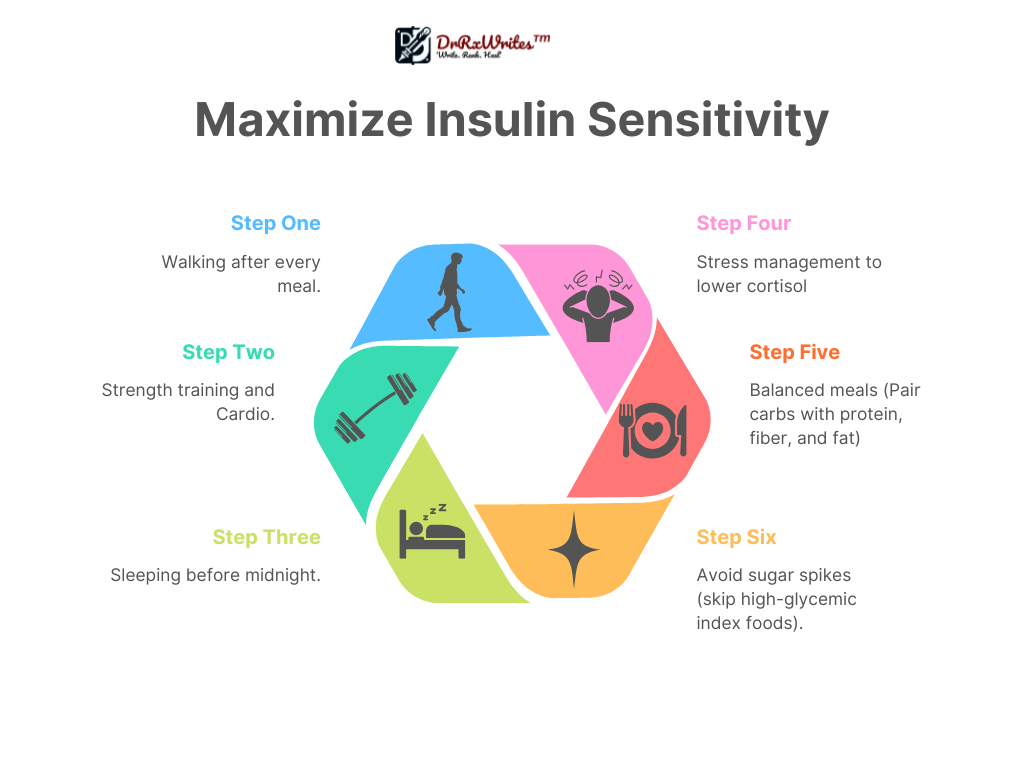
6 Daily Steps That Will Keep You Insulin Sensitive
- Walking after every meal.
- Strength training and Cardio.
- Sleeping before midnight.
- Stress management to lower cortisol
- Balanced meals (Pair carbs with protein, fiber, and fat)
- Avoid sugar spikes (skip high-glycemic index foods).
Also, try to eat fruit as a whole, paired with some protein or fiber (Chia Seeds or Psyllium Husk). Fruit juices are not exactly the health tonics that they are marketed to be.
The Takeaway – Fitness is more than just calories in versus calories out
Calorie counting is just a rudimentary step of nutrition. Fitness goes beyond tradtional approaches to weight loss. Think of fitness as a long-term strategic investment in longevity, agility, and robustness well into your senior years. Balanced meals lead to balanced hormones, which keep your insulin sensitivity in top shape. Follow this path and unlock your energetic, aesthetic and agile self.
“Take care of your body. It’s the only place you have to live.”
— Jim Rohn
Sources
- Harvard Health Publishing. (2023, April 6). A good guide to good carbs: The glycemic index. Harvard Health.
- Buxton, O. M., Cain, S. W., O’Connor, S. P., Porter, J. H., Duffy, J. F., Wang, W., … & Shea, S. A. (2012). Adverse metabolic consequences in humans of prolonged sleep restriction combined with circadian disruption
- Garaulet, M., & Gómez-Abellán, P. (2014). Chrononutrition: Timing of food intake and obesity.
- Sato, M., Konishi, K., & Ouchi, K. (2019). Relationship between chronotype, social jetlag, and insulin resistance in adults.
- Savikj, M., Zierath, J. R., & Ekblom-Bak, E. (2019). Time-of-day-dependent adaptations to exercise impact skeletal muscle and insulin sensitivity.
- Van Cauter, E., Spiegel, K., Tasali, E., & Leproult, R. (2007). Impact of sleep loss and circadian misalignment on metabolic regulation.
- Wong, P. M., Hasler, B. P., Kamarck, T. W., Muldoon, M. F., & Manuck, S. B. (2015). Circadian misalignment reduces insulin sensitivity in healthy adults.

Dr. Hasnain Siraj Memon is a Doctor of Pharmacy (Pharm D), medical content creator, and the founder of DrRxWrites. With a strong foundation in clinical pharmacy and a creative eye for storytelling, he transforms complex medical and wellness topics into accessible, evidence-based content for both professionals and the general public.
His writing is guided by a passion for accuracy, empathy, and public education helping readers make informed decisions about their health, habits, and healing. Whether he’s explaining pharmacology or sharing life lessons from the hospital ward, Hasnain brings clarity and heart to every piece.
He’s currently building a library of wellness content while offering freelance writing services in medical blogging, drug reviews, SEO optimization, and patient education materials.
Dr. Hasnain Siraj Memon is a Doctor of Pharmacy (Pharm D), medical content creator, and the founder of DrRxWrites. With a strong foundation in clinical pharmacy and a creative eye for storytelling, he transforms complex medical and wellness topics into accessible, evidence-based content for both professionals and the general public.His writing is guided by a passion for accuracy, empathy, and public education helping readers make informed decisions about their health, habits, and healing. Whether he’s explaining pharmacology or sharing life lessons from the hospital ward, Hasnain brings clarity and heart to every piece. He’s currently building a library of wellness content while offering freelance writing services in medical blogging, drug reviews, SEO optimization, and patient education materials.
View All Articles
