
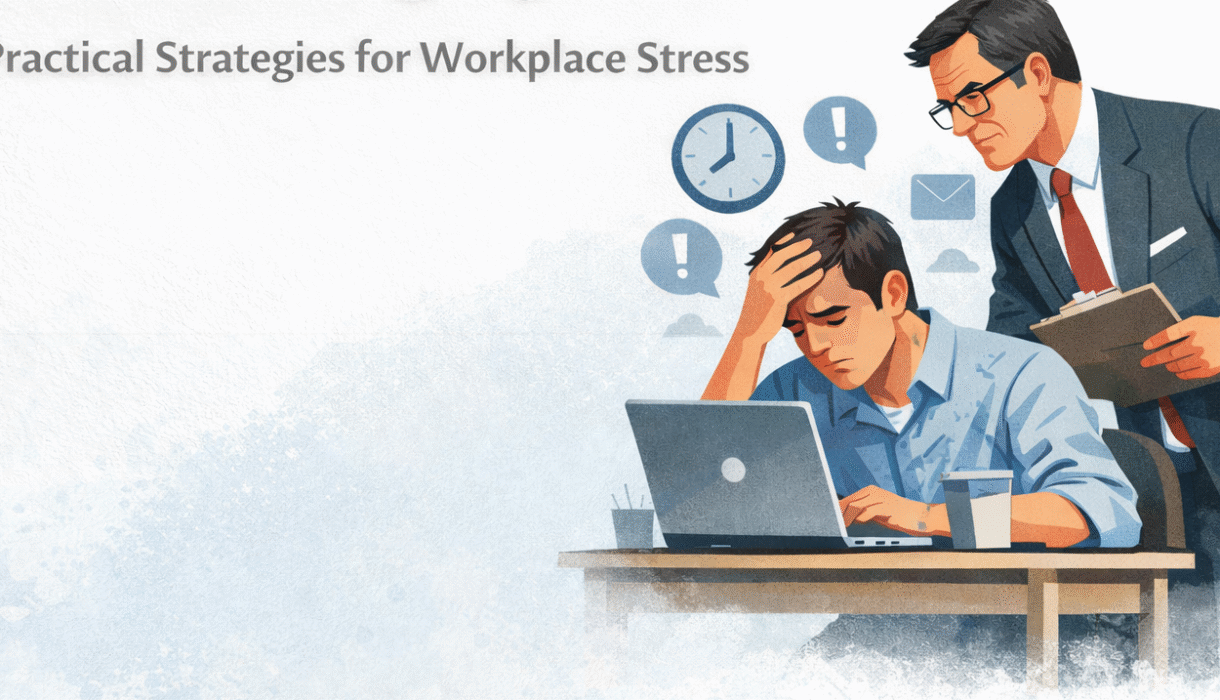
How to Deal With Toxic, Control-Freak Micromanaging Bosses (Without Losing Your Sanity)
Posted in :


Almost everyone encounters a difficult manager at some point. But there’s a specific type that drains energy faster than any workload ever could: the toxic micromanager. This isn’t just someone who likes structure. It’s a boss who controls excessively, distrusts constantly, and turns everyday work into psychological pressure.
What is a micromanaging boss?
A micromanaging boss is a manager who excessively controls employee tasks, demands constant updates, and prioritizes monitoring over results, often due to insecurity or lack of trust.
“Research shows micromanagement is among one of the top three reasons employees resign. It kills creativity, breeds mistrust, causes undue stress, and demoralizes your team.” – Harvard Business School
If you feel anxious before work, monitored instead of supported, or afraid to make small decisions, you’re probably dealing with one.
Here’s how to recognize the pattern and, more importantly, how to handle it strategically.
What a Micromanaging Boss Actually Is
A micromanager is not simply detail-oriented. The difference lies in motivation.
Healthy managers focus on results.
Micromanagers focus on control.
Common behaviors include:
- Constant calls and messages for updates
- Monitoring your whereabouts instead of outcomes
- Expecting immediate responses at all times
- Treating small deviations as personal betrayal
- Using words like commitment, loyalty, or discipline to enforce compliance
At its core, micromanagement usually comes from insecurity, not leadership strength.
Why Micromanagers Create So Much Stress

The human brain needs autonomy to function well. When autonomy disappears, stress hormones increase even if the workload itself is manageable.
According to the American Psychological Association, Work stress has been identified as a risk factor for hypertension, diabetes, upper extremity musculoskeletal problems, back problems, and cardiovascular disease.
Micromanagement creates three psychological pressures:
1. Loss of Control
You stop feeling ownership over your work.
2. Constant Evaluation Anxiety
Every action feels monitored, which leads to overthinking and burnout.
3. Emotional Exhaustion
You spend more energy managing your boss’s reactions than doing actual work.
This is why people often feel physically drained even on light workdays under such managers.
7 Practical Strategies to Handle a Controlling Micromanager

Step 1: Stop Taking It Personally
This is the hardest but most important shift.
Micromanagers behave similarly with most team members over time. Their behavior reflects their anxiety about authority, performance pressure, or job security, not your worth or competence.
If you interpret their control as a personal attack, you enter emotional conflict. If you see it as a predictable management style, you can respond strategically.
Think of it as managing a system, not fighting a person.
Step 2: Reduce Their Anxiety (Strategically)
Micromanagers seek reassurance. You can often reduce interference by giving controlled visibility.
Try:
- Sending short proactive updates before they ask
- Confirming plans briefly (“Will complete by 2 PM.”)
- Keeping communication concise and factual
The goal is not submission. The goal is reducing triggers that make them hover.
When uncertainty decreases, monitoring often decreases too.
Step 3: Set Quiet Boundaries
Direct confrontation rarely works early on. Instead, establish boundaries gradually.
Examples:
- Respond during working hours consistently but not instantly every time.
- Avoid oversharing personal availability.
- Keep conversations task-focused rather than emotional.
Consistency teaches people how to treat you.
Step 4: Document Everything
In controlling environments, clarity protects you.
Keep records of:
- Task assignments
- Instructions received
- Completed work
- Schedule expectations
Documentation reduces conflict because facts replace arguments. It also protects you if escalation happens.
Step 5: Avoid Emotional Reactions
Micromanagers often escalate when they sense resistance or defensiveness.
Instead:
- Stay calm.
- Use neutral language.
- Avoid sarcasm or long explanations.
Short, professional responses lower emotional intensity and prevent power struggles.
Example:
“Noted. I’ll update you once completed.”
Simple communication reduces friction dramatically.
Step 6: Decide Whether Adaptation or Exit Makes Sense
Not every situation should be fixed. Some environments are structurally unhealthy.
Ask yourself:
- Is this temporary or permanent?
- Am I learning valuable skills here?
- Is the stress worth the compensation or experience?
If the role blocks growth, harms mental health, or conflicts with long-term goals, planning an exit is often the healthiest strategy.
“Gen Z is driving a shift in leadership styles, favoring more collaborative and empathetic approaches over traditional hierarchical models. They respond best to leaders who demonstrate emotional intelligence and genuinely care about their well-being,” as noted by Forbes leadership studies.
Leaving a toxic system is not failure. It’s resource management.
Step 7: Protect Your Mental Health Outside Work
Micromanagement creates lingering stress even after work hours. Counterbalance intentionally:
- Exercise or physical movement
- Structured routines after work
- Limiting work communication outside hours when possible
- Talking to supportive peers instead of internalizing frustration
Recovery time is essential to prevent burnout.
The Reality Most People Don’t Say
Micromanagers rarely change quickly. Organizational culture usually enables them.
Your power lies in three things:
- Emotional detachment
- Strategic communication
- Long-term career positioning
The goal isn’t winning against a difficult boss. The goal is protecting your energy while moving toward environments where autonomy and competence are respected.
Final Thought
A good job challenges your skills.
A toxic job challenges your self-worth.
If you constantly feel smaller, monitored, or exhausted despite doing your best, the issue may not be your performance. It may simply be poor leadership.
And sometimes, the most professional decision you can make is choosing a healthier direction forward.
Sources & References
The following sources were referenced to support psychological and workplace management insights discussed in this article.
- Work Stress and Health Outcomes – Occupational Medicine (PubMed)
- How to Stop Micromanaging – Harvard Business School Online
- Workplace Stress and Health – American Psychological Association (APA)
- Gen Z Workforce Statistics and Trends – Cake.com
- The Evolution of Work: How Gen Z Is Reshaping Leadership – Forbes

Dr. Hasnain Siraj Memon is a Doctor of Pharmacy (Pharm D), medical content creator, and the founder of DrRxWrites. With a strong foundation in clinical pharmacy and a creative eye for storytelling, he transforms complex medical and wellness topics into accessible, evidence-based content for both professionals and the general public.
His writing is guided by a passion for accuracy, empathy, and public education helping readers make informed decisions about their health, habits, and healing. Whether he’s explaining pharmacology or sharing life lessons from the hospital ward, Hasnain brings clarity and heart to every piece.
He’s currently building a library of wellness content while offering freelance writing services in medical blogging, drug reviews, SEO optimization, and patient education materials.
Dr. Hasnain Siraj Memon is a Doctor of Pharmacy (Pharm D), medical content creator, and the founder of DrRxWrites. With a strong foundation in clinical pharmacy and a creative eye for storytelling, he transforms complex medical and wellness topics into accessible, evidence-based content for both professionals and the general public.His writing is guided by a passion for accuracy, empathy, and public education helping readers make informed decisions about their health, habits, and healing. Whether he’s explaining pharmacology or sharing life lessons from the hospital ward, Hasnain brings clarity and heart to every piece. He’s currently building a library of wellness content while offering freelance writing services in medical blogging, drug reviews, SEO optimization, and patient education materials.
View All Articles