

Finasteride Joint Pain: Real Side Effect or Something Else?
Posted in :

Surely, when you started finasteride to fix your hair, you didn’t expect it to cause joint pain, stiffness, and generalized poor bone health. You might wonder if there is any truth to it, or if it’s all just anecdotes and fear-mongering on Reddit.
I myself have been on finasteride since October 2023. It did benefit my hair, but lately, my joints are not the same as they were before. I have been getting frequent ligament and tendon injuries. I’d say my joints just aren’t bouncing back after strength training as quickly as they did before I started finasteride.
Short Answer: Joint pain is not a listed side effect of finasteride; however, some users do report it. The cause is likely indirect.
Let’s get our game on and decode it once and for all.
What is Finasteride and how does it work?
Finasteride is a 5-alpha-reductase inhibitor, that is, it blocks the enzyme responsible for the conversion of testosterone into dihydrotestosterone (DHT). DHT causes miniaturization of hair follicles, leading to Male Pattern Baldness in genetically predisposed men.
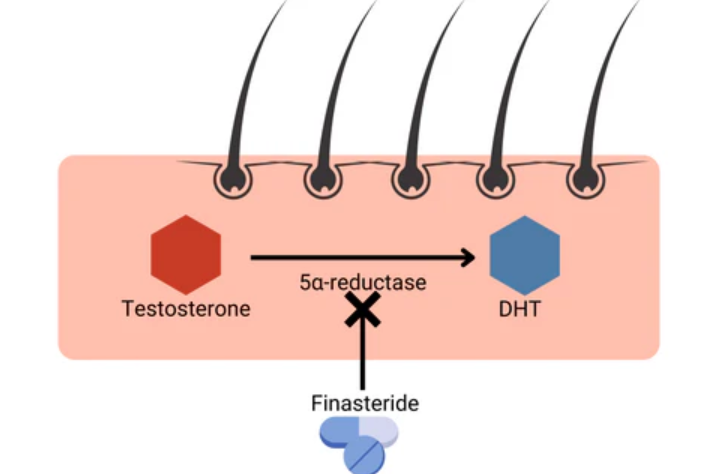
Now, the pop science will have you convinced that DHT is a trash hormone (Remember HairCafe guy? That YouTuber Kevin Mann), but the truth is far from it.
DHT is a crucial hormone even into adulthood, as it is responsible for optimum joint health, muscle endurance, recovery, and that hardening effect (you know that chiseled look? well say thanks to DHT for that), but DHT is a strong androgen, not the main muscle hormone
- DHT binds more strongly to androgen receptors than testosterone, making it biologically potent (StatPearls).
- However, in adult physiology, DHT is not a primary regulator of muscle mass or maintenance (Cleveland Clinic).
In simple terms:
DHT is powerful, but muscle growth depends more on testosterone and other factors.
Can Finasteride Cause Joint Pain? (Anecdotes vs Evidence)
Joint pain is not listed as a side effect of finasteride in major studies. However, Post-marketing reports and online users’ experiences draw a different picture altogether.
I also have been experiencing frequent joint and ligament-related discomfort now more than ever. Here is step by step guide on how I dealt with Finasteride Side Effects Using Natural Testosterone Boosters
So, what’s going on? Is there any truth to it, or is it just a classic case of correlation doesn’t equal causation?
What Real Users Are Experiencing
Many users on online forums like Reddit and Quora report symptoms like:
According to a user in r/Naturalbodybuilding
Same thing reported by a user in r/Hypermobility
u/Danielboston in r/HairlossResearch used finasteride for 3 months and experienced similar symptoms:
Another edgy but passionate fellow r/HairlossResearch reports the same issue
These are just anecdotal reports and may not apply to everyone, but there seems to be a connection between DHT and joint health.
Possible Reasons Behind Joint Pain: Evidence Backed
According to clinical research, finasteride isn’t linked to joint pain, but several underlying mechanisms may indirectly contribute to joint discomfort.

1. Hormonal Changes (Reduced DHT)
DHT is an androgen hormone involved in a variety of physiological processes beyond hair follicles. A 1 mg dose of Finasteride can reduce DHT levels by approximately 70%.
Research suggests that androgens may influence:
- Muscle function
- Tissue repair
- Recovery after physical stress
A reduction in DHT may, in some individuals:
- Slightly impair recovery
- Increase perceived stiffness
- Contribute to discomfort during exercise
Supporting evidence:
- Traish AM. The post-finasteride syndrome: clinical manifestation of drug-induced endocrine dysfunction. Curr Sex Health Rep. 2018.
- Basaria S. Androgens and physical function in men. J Clin Endocrinol Metab. 2010.
While this is not conclusive, it does provide us with a biologically plausible explanation.
2. Relative Increase in Estrogen Activity
When DHT levels are reduced, there is a relative increase in estrogen hormone in men.
Science Fact: Testosterone is converted into DHT (by 5-Alpha-Reductase enzyme) and Estrogen (by Aromatase enzyme).
You do the math here. If Testosterone conversion to DHT is blocked (by up to 70%), the conversion shifts towards estrogen. Furthermore, DHT itself has anti-estrogenic properties, so it’s a double whammy.
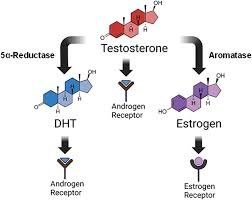
This shift may contribute to:
- Mild fluid retention
- Increased tissue sensitivity
- Low-grade inflammation
These effects can sometimes be perceived as joint discomfort or stiffness.
Supporting concept: Hormonal balance between androgens and estrogens plays a role in fluid regulation and inflammatory responses.
3. Impact on Energy and Recovery
Some users report:
- Reduced physical drive
- Increased fatigue
- Lower workout performance
These changes can indirectly affect:
- Muscle recovery
- Joint stability
- Training consistency
As a result, normal muscle soreness may be misinterpreted as joint pain.
4. Nutritional Deficiencies (Common but Overlooked)
Joint pain is often unrelated to finasteride and instead linked to:
- Vitamin D deficiency
- Magnesium deficiency
- Poor dietary intake

These can independently cause:
- Bone discomfort
- Muscle weakness
- Joint stiffness
This is one of the most common and overlooked causes.
Supporting evidence:
Lower vitamin D levels are also linked to increased pain intensity, and supplementation may help reduce musculoskeletal pain in deficient individuals (Alonso-Pérez et al., 2024); (le Goaziou et al., 2014).
Final Verdict: TL;DR
What users report as anecdotes
- Joint pain after starting finasteride
- Stiffness during workouts
- Slower recovery
What research shows through evidence
- Possible indirect hormonal effects
- No strong direct causal link
Verdict:
Finasteride may contribute to joint discomfort indirectly, but there is no strong clinical evidence proving it directly causes joint pain.
How to Know If Finasteride Is Causing Joint Pain
To assess whether finasteride is the cause, check:
- Did symptoms start after beginning the medication?
- Have training intensity or routines changed?
- Is sleep and recovery adequate?
- Are vitamin D and nutrient levels normal?
A structured evaluation helps avoid incorrect assumptions.
What to Do If You Experience Joint Pain
If you develop joint discomfort while taking finasteride:
- Improve recovery (sleep, hydration, nutrition)
- Reduce workout intensity temporarily
- Check for vitamin D or magnesium deficiency
- Monitor symptoms over time
- Consider a short discontinuation trial (2–4 weeks if needed)
This approach helps identify the real cause.
When to Seek Medical Advice
Seek professional evaluation if:
- Pain is persistent or worsening
- It limits daily activity
- It is associated with fatigue or weakness
FAQs
No, it is not commonly reported in clinical studies.
Possibly, due to hormonal changes, though evidence is limited.
Not necessarily. Evaluate other causes first.
Yes, especially if recovery is insufficient.
Conclusion
After skimming through the anecdotes and evidence, we can safely say with certainty that Finasteride is unlikely to directly cause joint pain. However, hormonal changes, slower recovery, and nutritional deficiencies may contribute to symptoms that resemble joint discomfort.
A balanced, evidence-based evaluation is essential before attributing symptoms solely to the medication.
Sources
- Traish AM. The post-finasteride syndrome: clinical manifestation of drug-induced endocrine dysfunction. Curr Sex Health Rep. 2018.
- Basaria S. Androgens and physical function in men. J Clin Endocrinol Metab. 2010.
- Holick MF. Vitamin D deficiency. N Engl J Med. 2007.
- Kinter KJ, Amraei R, Anekar AA. Biochemistry, dihydrotestosterone. InStatPearls [Internet] 2023 Jul 30. StatPearls Publishing.
- Alonso-Pérez JL, Martínez-Pérez I, Romero-Morales C, Abuín-Porras V, López-Bueno R, Rossettini G, Leigheb M, Villafañe JH. Relationship between serum vitamin D levels and chronic musculoskeletal pain in adults: A systematic review. Nutrients. 2024 Nov 26;16(23):4061.
- Le Goaziou MF, Kellou N, Flori M, Perdrix C, Dupraz C, Bodier E, Souweine G. Vitamin D supplementation for diffuse musculoskeletal pain: Results of a before-and-after study. The European journal of general practice. 2014 Mar 1;20(1):3-9.

Dr. Hasnain Siraj Memon is a Doctor of Pharmacy (Pharm D), medical content creator, and the founder of DrRxWrites. With a strong foundation in clinical pharmacy and a creative eye for storytelling, he transforms complex medical and wellness topics into accessible, evidence-based content for both professionals and the general public.
His writing is guided by a passion for accuracy, empathy, and public education helping readers make informed decisions about their health, habits, and healing. Whether he’s explaining pharmacology or sharing life lessons from the hospital ward, Hasnain brings clarity and heart to every piece.
He’s currently building a library of wellness content while offering freelance writing services in medical blogging, drug reviews, SEO optimization, and patient education materials.
Dr. Hasnain Siraj Memon is a Doctor of Pharmacy (Pharm D), medical content creator, and the founder of DrRxWrites. With a strong foundation in clinical pharmacy and a creative eye for storytelling, he transforms complex medical and wellness topics into accessible, evidence-based content for both professionals and the general public.His writing is guided by a passion for accuracy, empathy, and public education helping readers make informed decisions about their health, habits, and healing. Whether he’s explaining pharmacology or sharing life lessons from the hospital ward, Hasnain brings clarity and heart to every piece. He’s currently building a library of wellness content while offering freelance writing services in medical blogging, drug reviews, SEO optimization, and patient education materials.
View All Articles